


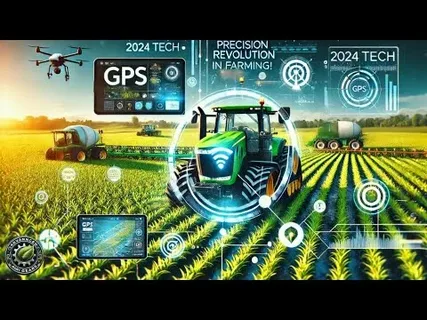
Farming, one of the oldest human activities, is undergoing a profound transformation. The rise of technology has introduced new methods that enhance productivity, sustainability, and profitability. At the forefront of this transformation is precision agriculture, a revolutionary approach that is changing how farmers manage their fields and crops. In this article, we explore how precision agriculture is revolutionizing farming and the ways it is changing the game for modern agriculture.
What is Precision Agriculture?
Precision agriculture refers to the use of advanced technologies such as GPS, drones, sensors, and data analytics to monitor and manage agricultural practices more accurately and efficiently. Instead of treating a whole field uniformly, precision agriculture allows farmers to optimize inputs—like water, fertilizer, and pesticides—on a smaller scale, tailored to the specific needs of different parts of a field.
Key Technologies Driving Precision Agriculture
Several cutting-edge technologies underpin this new farming revolution:
- GPS and Satellite Imagery: These tools provide detailed maps of fields, highlighting variations in soil quality, moisture levels, and crop health.
- Drones: Unmanned aerial vehicles help farmers survey large areas quickly and capture real-time data.
- Sensors and IoT Devices: Soil sensors and weather stations monitor environmental conditions, offering insights to optimize irrigation and reduce waste.
- Big Data and Analytics: Sophisticated software processes collected data, enabling precise decision-making.
How Precision Agriculture is Changing the Game
The impact of precision agriculture is profound, altering traditional farming methods in several ways:
Increased Efficiency and Reduced Waste
By applying inputs only where they are needed, farmers can significantly reduce the use of water, fertilizers, and pesticides. This not only lowers costs but also minimizes environmental harm, making farming more sustainable.
Enhanced Crop Yields
Precision agriculture enables better management of crops by identifying issues early and adjusting care accordingly. This leads to healthier plants and higher yields, helping to meet the food demands of a growing global population.
Data-Driven Decisions
Farmers are empowered with real-time, accurate data that supports informed decisions. This reduces guesswork and enhances productivity, enabling farms to operate at their maximum potential.
Challenges and Future Prospects
Despite its benefits, precision agriculture faces challenges such as high initial costs, technology adoption barriers, and the need for technical skills. However, ongoing advancements and increasing awareness are making these technologies more accessible.
Looking ahead, revolutionizing farming: how precision agriculture is changing the game will continue to be a critical topic as global agriculture strives for sustainability and efficiency. The integration of AI and machine learning promises even smarter farming solutions in the near future.
Conclusion
Revolutionizing farming: how precision agriculture is changing the game is more than just a trend—it’s a paradigm shift that holds the key to feeding the world sustainably. By harnessing technology, farmers are transforming agriculture into a highly efficient, data-driven, and environmentally conscious industry. As this revolution progresses, precision agriculture will undoubtedly play a pivotal role in shaping the future of farming worldwide.
