


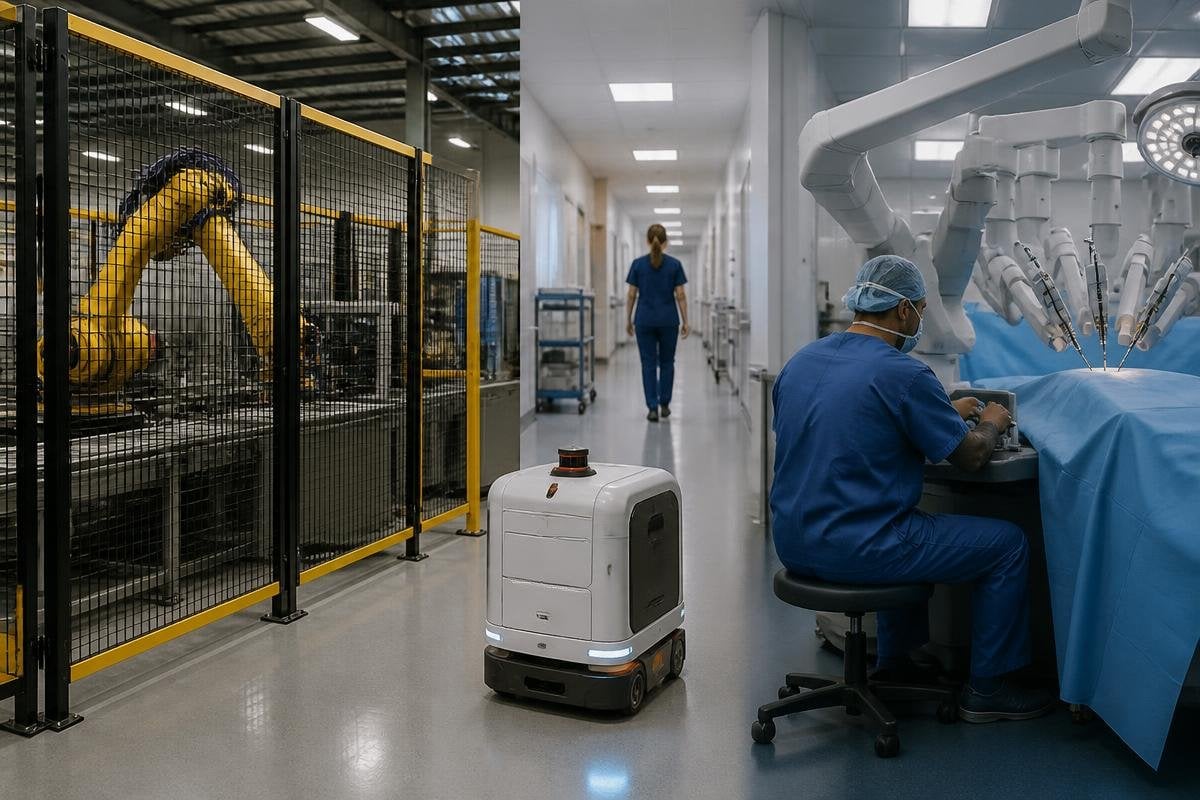
A warehouse arm, delivery robot, and surgical system can all be called robots, yet they create very different risks. Good rules should follow what a machine does, where it operates, and who could be hurt when it fails.
Quick read
- Set rules by risk, task, and location rather than by robot shape.
- Ask makers for safety evidence, update records, and clear human control.
- Test new systems in limited areas before wider use.
Start with the task, not the label
The robot’s body tells you little about the harm it can cause. A small mobile robot in a hospital may carry medicine near people, while a large arm may stay inside a fenced production cell. Their safety needs are different.
A useful rulebook should sort systems by task and setting. The first group could cover low-risk machines that stay in controlled spaces. Another could cover systems that move near workers, patients, children, or public roads. A higher group could cover robots that lift heavy loads, handle sharp tools, make medical choices, or control vehicles.
This approach gives regulators a better map. It also keeps a classroom robot from facing the same paperwork as a machine that can injure someone with a moving arm.
The rule should change when the risk changes. Moving from a fenced factory floor into a busy public space requires a new review, even if the hardware stays the same.
Ask for proof that matches the risk
A company seeking approval should show how its robot behaves during normal work and common failures. The file could include the operating area, speed limits, payload, stopping distance, sensor limits, and the actions available to a human operator.
That evidence should stay current. Software changes can affect motion planning, obstacle detection, and remote control, so a regulator needs a record of what changed and when. A machine that receives a new model should not keep the same safety file without review.
Incident reporting matters for the same reason. A near miss can show a bad sensor position, a confusing alert, or a gap in worker training before a person gets hurt. Reports should record the robot’s software version, task, location, and event time. Those details help investigators compare failures across sites.
Privacy needs its own test. Cameras, microphones, and location sensors can collect information about workers and the public. Rules should limit what the robot gathers, how long it stores the data, and who can view it.
The system should collect what its task needs, then discard the rest when the job allows it.
Rules for data collection need to match what robots actually do at work. Reports on robots in daily work can give policy teams dated evidence about named systems and the limits shown in testing before they write rules for small teams.
Give small teams a safe route to test
Early companies often lack the staff and money to meet a large approval process before they have a working product. A long, unclear review can push them to leave the market or test without enough oversight. Neither result helps public safety.
Governments can offer limited test areas, fixed review times, and clear documents that explain what evidence is needed. A permit could cover one site, one task, and one operating period. The maker would report incidents and stop the trial if the robot crosses stated limits.
That permit should carry conditions. A public delivery robot might need a remote stop, a visible status light, a speed cap, and a named person who can respond to faults. A factory arm might need a guard, a lockout process, and a test that checks whether it stops when a worker enters the protected area.
Rules should also leave room for research. Universities and small firms need a way to test new control software without meeting every requirement for a finished commercial product. A research permit can allow wider technical work while keeping the test area, people, and operating hours limited.
Keep one person responsible
Automation can spread responsibility across the maker, site owner, operator, and software supplier. A clear rule should name who checks the robot, who can stop it, and who reports an injury or near miss.
Human control needs a practical meaning. A stop button that sits far from the work area may satisfy a document while failing during an emergency. Remote control also needs limits: the operator should know when the signal drops, what the robot can see, and whether commands are delayed.
I’d support rules that require a safety case for higher-risk robots, while giving low-risk systems a shorter path to approval. The maker would explain the hazards, show the safeguards, and state the conditions where the system must stop.
A decision guide for regulators
Before approving a robot, check these points:
- Task and setting: Does it work near people, on public land, or with heavy tools?
- Failure response: Does it stop safely when power, sensors, software, or communications fail?
- Human control: Can a trained person stop the robot and understand its status?
- Change records: Does the maker record software updates, hardware changes, and new tasks?
- Incident data: Can the site report injuries, near misses, and repeated faults with useful detail?
- Privacy limits: Does the system collect only the video, audio, and location data it needs?
The practical test is simple: can a regulator explain the rule to a small robotics company and still protect the person working beside the machine? If the answer is no, the rule needs work before the robot reaches the floor.
